



By Shaban Omar
At least 179,000 people in Kwale County have been severely affected by drought and are in urgent need of relief food, according to the National Drought Management Authority (NDMA).
The latest assessment shows that 90 percent of the county has been hit hard, with all six sub-counties, Lunga-Lunga, Msambweni, Samburu, Matuga, Kinango and Shimba Hills experiencing acute water and food shortages.
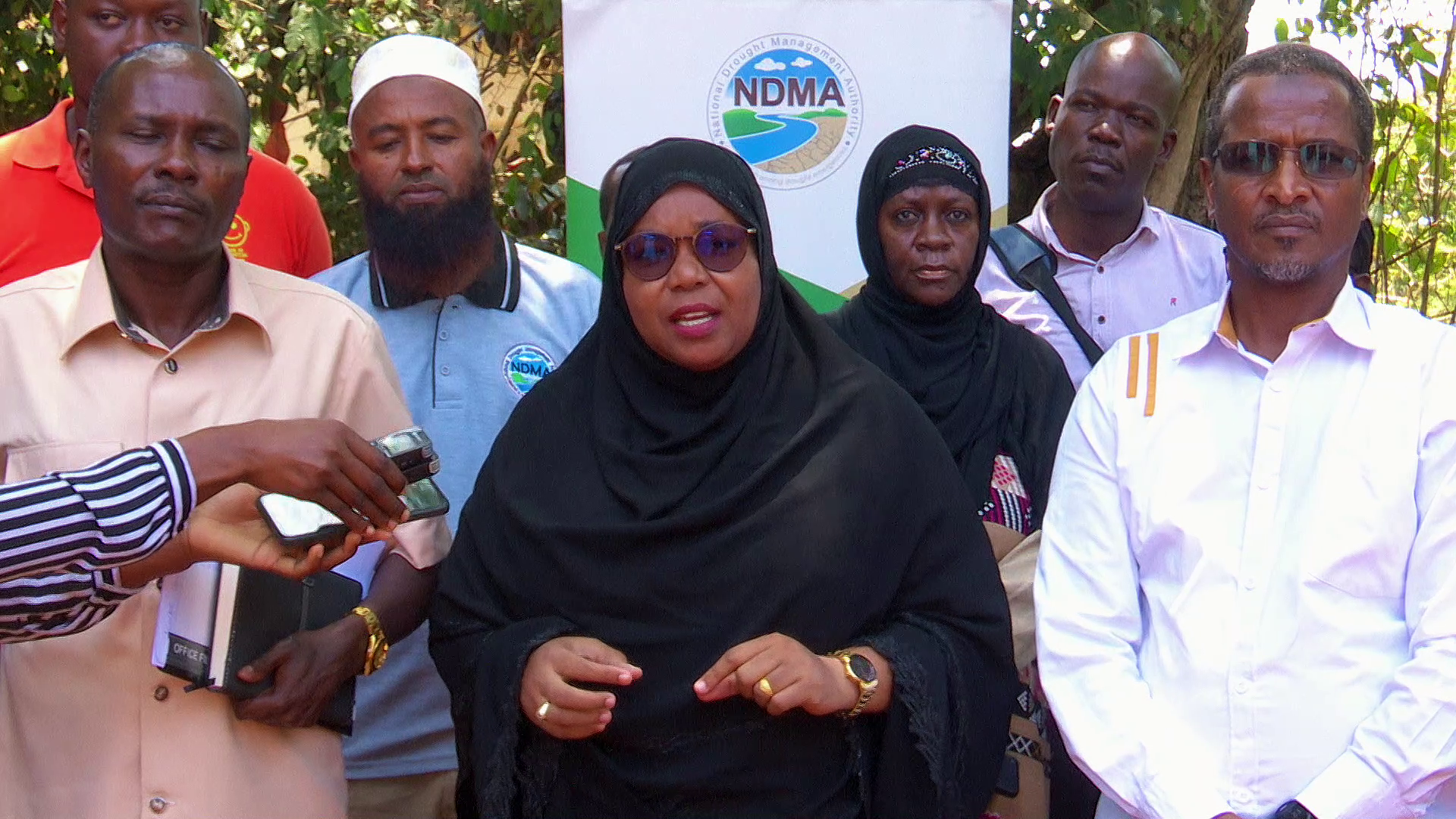
Speaking on Thursday, January 12, 2026 in Kwale Town, NDMA Chief Executive Officer Hared Hassan said Kwale is now officially under drought alert phase, placing it among the most affected counties in the country.
Hassan noted that the government has already started food interventions, with 10,000 bags of relief food currently being distributed to vulnerable households in Kwale.
“Kwale is in the drought alert phase, but there is nothing to worry about. The government has put in place deliberate measures to mitigate the drought,” he said.
He added that the national government has allocated Sh4.1 billion for drought mitigation efforts in arid and semi-arid counties, including food supplies and emergency response operations.
Part of the funding, Hassan said, will go towards repairing and maintaining strategic boreholes to ease pressure on drought-stricken communities and public institutions such as schools and hospitals.
He assured residents that the country is adequately prepared to manage the worsening situation, noting that the government has a clear contingency plan to prevent the drought from escalating into a full-blown crisis.
Hassan also commended the Kwale County Government for what he described as proactive coordination and swift action in responding to the drought situation.
The county teams are well prepared, with strong structures cascaded down to the ward level. For long-term solutions, the county has also put in place key infrastructure projects,” he said.
County Commissioner David Rotich said the government, in collaboration with county authorities and partners, is committed to implementing strong interventions to ensure no life is lost to hunger.
Rotich urged residents to remain vigilant against wildfires and avoid clearing farms using fire.
“The Kenya Forest Service has already issued a wildfire alert, and therefore I caution locals not use fire when preparing your farms,” he said.
He added that the Kenya Wildlife Service is also monitoring wildlife movements to prevent animals from straying into farms in search of food and water due to the worsening drought.
Kwale Governor Fatuma Achani said the county government, working jointly with the national government, has rolled out comprehensive measures to ensure all affected households have access to food and water.
The interventions include water trucking in partnership with the Coast Water Works Development Agency (CWWDA), distribution of relief food, supply of animal feeds, and payment of school fees for learners from the most affected areas.
“We have come together as the county government, the national government and various stakeholders to assess the impact of the ongoing drought affecting our communities, especially in Kinango, Samburu and Lungalunga,” Achani said.
She added that through coordinated efforts, her administration will ensure residents receive adequate support to cope with the current challenges.
Achani further noted that the county is strengthening its long-term water infrastructure through the construction of water pans, drilling of boreholes and expansion of piped water networks to secure reliable access for households, agriculture and livestock.
So far, the county has constructed over 60 water pans in Kinango, Samburu and Lungalunga, drilled more than 100 boreholes, and expanded over 5,000 kilometres of water pipelines to improve water access across arid areas.
End
