
By Alloys Musyoka
The National Disaster Operations Centre (NDOC) has called on Kenya’s six coastal counties to integrate regular tsunami mock drills into daily safety routines across schools, tourism establishments, and fishing communities.
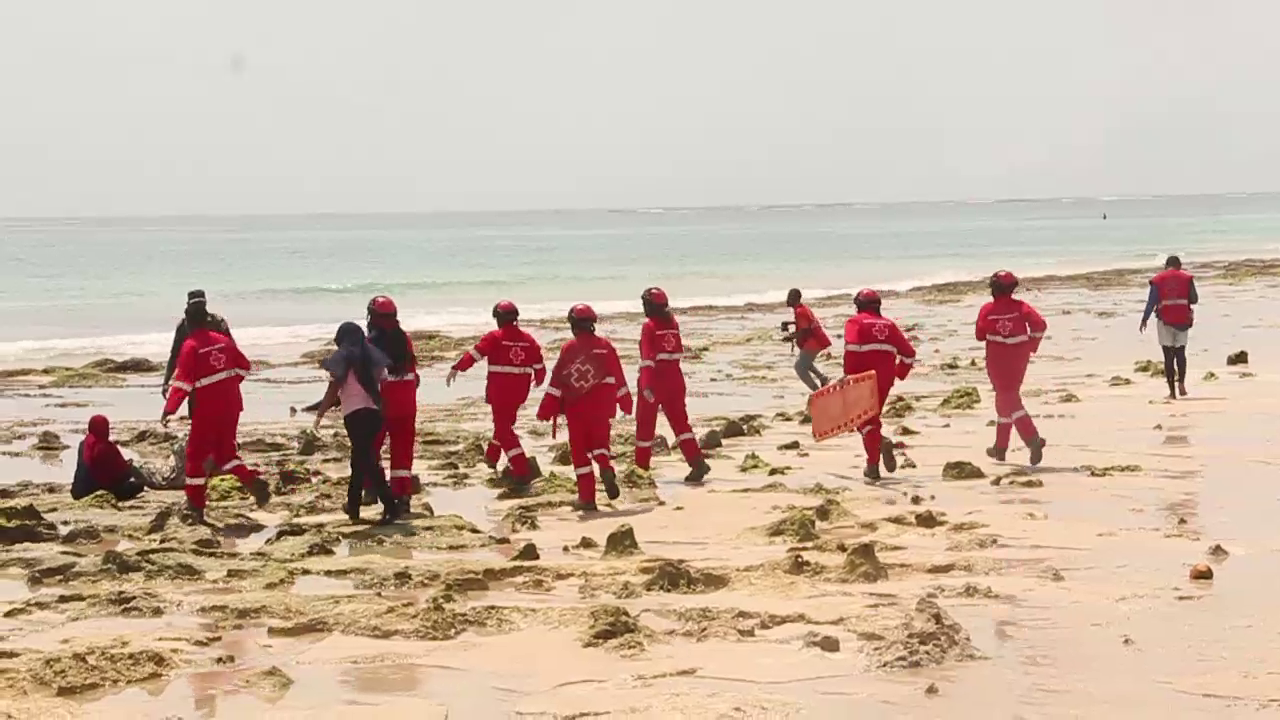
Speaking during a biennial tsunami simulation exercise at Congo Mosque Beach in Kwale County, NDOC Director Col. (Rtd.) David Samoei warned that preparedness cannot rely solely on periodic national drills.
He urged county governments to allocate dedicated funds, update stakeholder contact directories, and clearly mark evacuation routes and assembly points.
"Communities are the first line of defence in disaster preparedness and response," Samoei said. "Beach Management Units, fisherfolk, beach operators, tourism establishments, schools and local leaders must actively participate in tsunami preparedness."
Samoei noted that findings from the Kwale drill will guide the creation of the Kwale County Tsunami Preparedness and Response Action Plan, with key lessons shared with neighboring Mombasa, Kilifi, and Lamu counties to build a unified coastal safety network.
Testing Emergency Chains
The multi-agency exercise tested early warning communication chains, community evacuations from low-lying areas, search-and-rescue operations, and assembly-point management. Participating agencies included the County Government of Kwale, National Government Administration officers, the Kenya Meteorological Department, the Kenya Marine and Fisheries Research Institute (KMFRI), the Kenya Maritime Authority (KMA), security agencies, the Kenya Red Cross Society (KRCS), and the United Nations Population Fund (UNFPA).
UNFPA Kenya representative John Wafula stated that the simulation reinforces Kenya’s commitment to the Sustainable Development Goals (SDGs) and the Sendai Framework for Disaster Risk Reduction, calling for sustained investment and stakeholder collaboration.
Bolstering Local Capacity for the Holidays
County Executive Committee Member for Tourism Michael Mutua announced plans to expand local emergency infrastructure.
"We have proposed acquiring additional ambulances, fire engines and emergency boats in this financial year’s budget," Mutua said, adding that a County Emergency Policy currently before the County Assembly will further strengthen coastal response once passed.
With the festive season approaching and beach visitor numbers expected to surge, KRCS Kwale County Coordinator Mohammed Mwaenzi urged residents and tourists to stay alert and cooperate with emergency responders on standby.
The push aligns with Kenya’s National Disaster Risk Management Strategy (2025–2030), which shifts the country’s focus from reactive disaster relief toward proactive risk reduction and anticipatory action-mirroring regular simulation practices across tsunami-prone nations in the Indian Ocean and Asia-Pacific regions.