
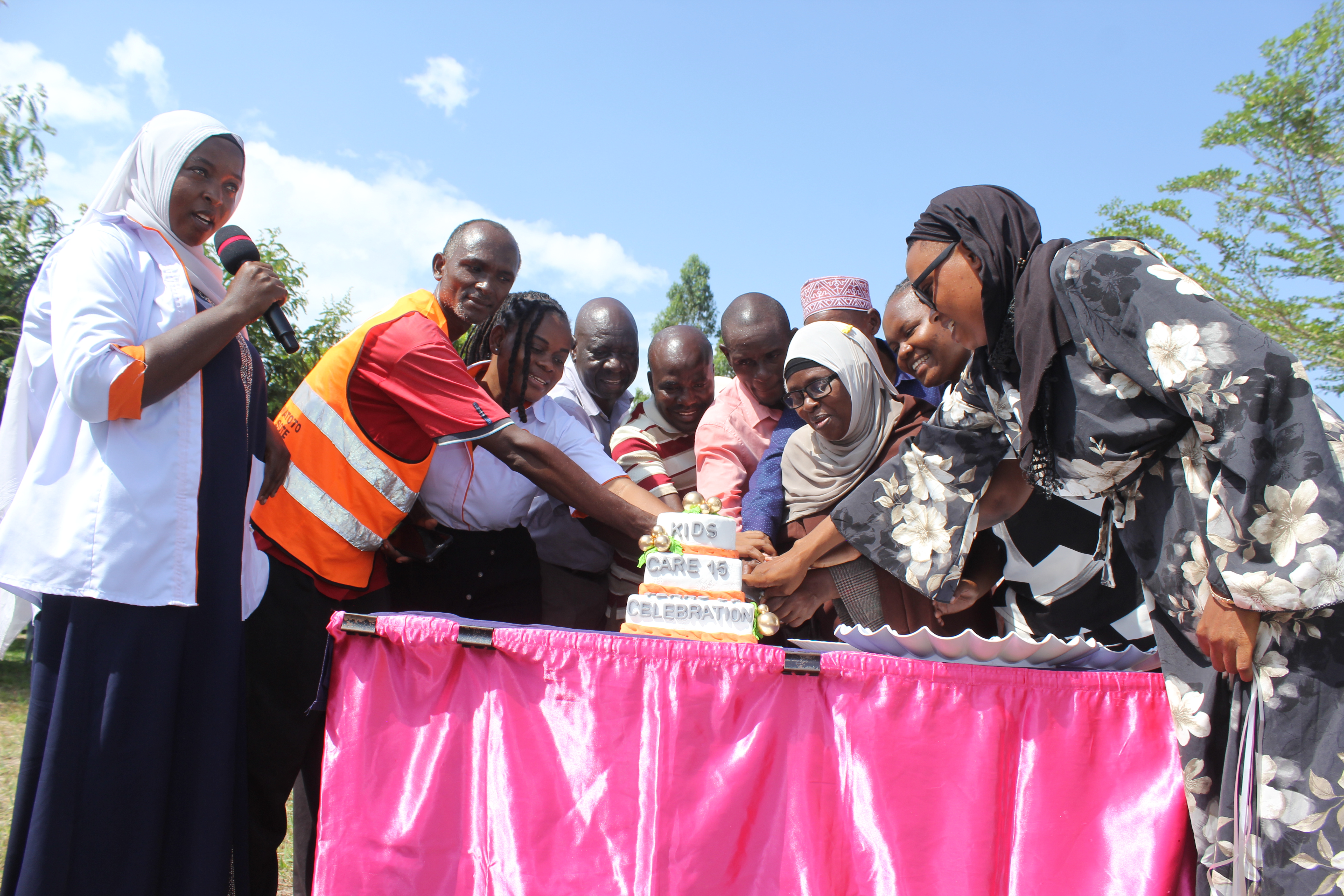
Four years ago, childhood in Lunga-Lunga Sub-County, Kwale County, was increasingly becoming a battle for survival, with many children exposed to neglect, child labor, forced marriages and teenage pregnancies.
For many families, poverty had become a breeding ground for child abuse, robbing children of their innocence, disrupting their education and threatening their future.
Today, however, communities that once struggled with widespread child protection challenges are increasingly taking the lead in identifying abuse, reporting violations and safeguarding vulnerable children.
The turnaround follows the introduction of a child protection project by Kidscare Kenya in 2022, in partnership with the county and national governments.
Speaking during the launch of Phase II of the project, Dzombo Community Child Protection Committee member Suleiman Chaka said child abuse cases were previously widespread but often went unreported or were deliberately swept under the carpet.
He said many children were engaged in exploitative labor, working in local food kiosks, herding livestock and serving as domestic workers, while others were married off to older people.
"We had many unreported child abuse cases, with children engaged in child labor and early marriages," he said.
Chaka said the project had helped challenge deep-rooted cultural beliefs practices by raising awareness of children's rights and encouraging residents to speak out against violations instead of remaining silent.
He added that livelihood initiatives had strengthened household resilience, making families better placed to provide for their children and reducing their vulnerability to exploitative practices.
Kidscare Board Member Hanisa Menza said increased community involvement had played a critical role in exposing abuse cases that would otherwise have gone unnoticed.
She said the project had shifted some interventions from individual household-based care to a community-driven approach, creating a wider support system for vulnerable children.
Menza added that the initiative had also prioritized children living with disabilities by promoting their rights and ensuring they were included in community protection efforts.
Kidscare Programme Director Rose Ambuso said a baseline survey conducted before the project revealed significant gaps in community awareness, with only 4.1 per cent of residents demonstrating adequate knowledge of children's rights and protection mechanisms.
She said the figure rose to 6.8 per cent by the end of the project's first phase in 2025, reflecting progress in awareness and community participation.
Ambuso attributed the improvement to efforts to equip residents with the skills to recognize and respond to abuse, noting that ignorance, stigma and cultural barriers had previously prevented many cases from being reported.
She said Kidscare had also brought together government agencies, community structures and other stakeholders to improve coordination and strengthen responses to violations.
"We realized that child protection is a shared responsibility. We therefore brought together government agencies, community structures and other stakeholders to build partnerships and ensure that children receive the protection they deserve," she said.
Children's County Officer Zaphania Apoko commended the project for making significant strides in addressing violations of children's rights in Lunga-Lunga.
He said children had previously suffered widespread abuse, including exploitation and sexual abuse by older men who took advantage of their vulnerability.
He expressed optimism that sustaining the partnership between Kidscare, government agencies and community structures would accelerate progress, not only in Lunga-Lunga but across Kwale County.
However, he cautioned that the progress made should not create room for complacency, saying the fight against child abuse was far from over.