
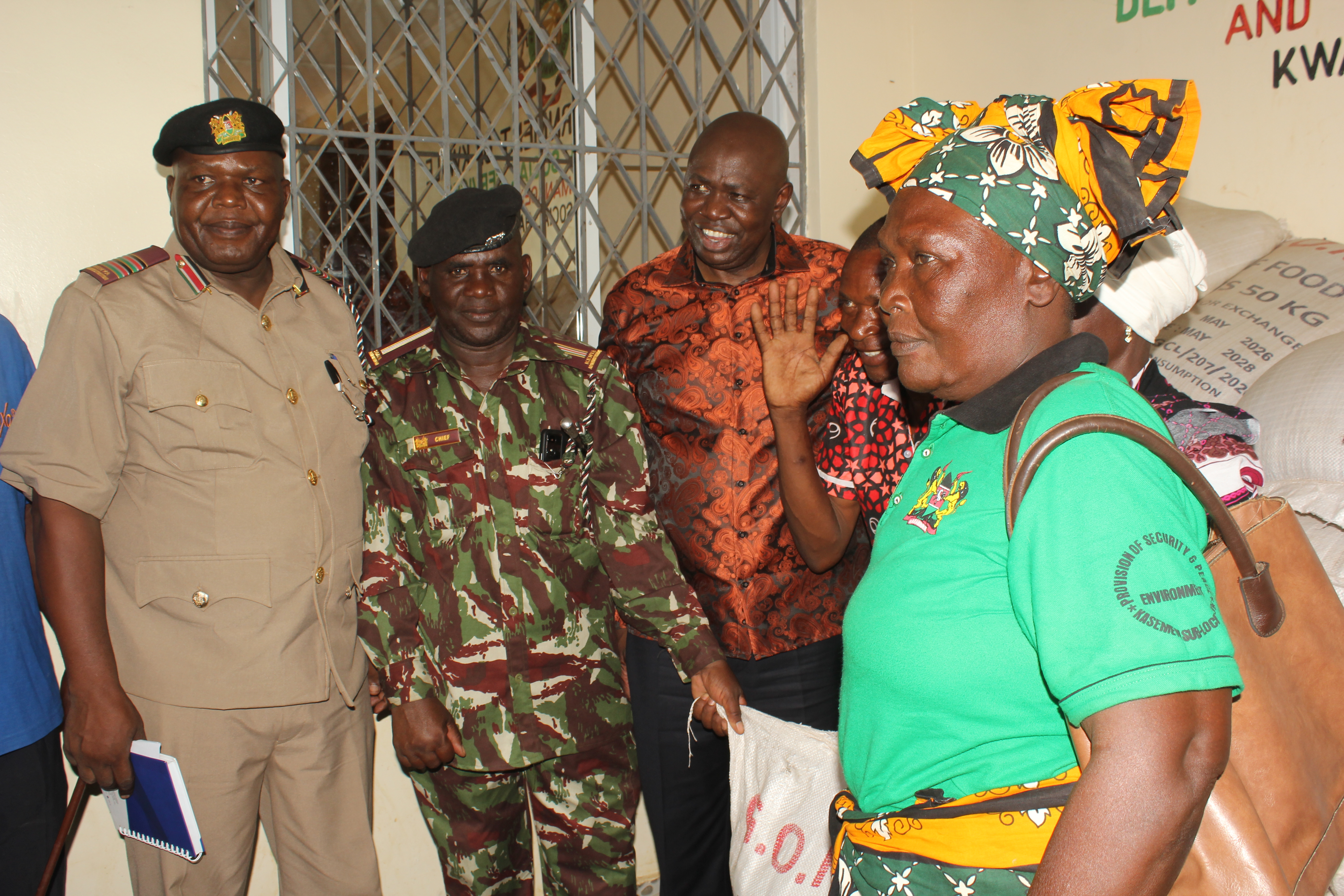
The national government has shifted blame to the Kwale County Government over the controversy surrounding the subdivision of the 156,000-acre Lunga-Lunga Ranch in Kasemeni, Lunga-Lunga Sub-County.
The ranch was earmarked for subdivision and allocation to the local community following the expiry of its lease in 2022. However, the exercise has sparked protests in recent weeks, with beneficiaries questioning discrepancies in land sizes and alleged injustices in the allocation process.
Speaking in Kasemeni, Government Spokesperson Charles Owino said the national government issued title deeds based on a master plan prepared by the county government, which identified 56,000 acres for a settlement scheme.
He maintained that the county was responsible for preparing the plan after the lease expired, while the national government only implemented its proposals.
"This problem is not coming from the national government but the county and you, the community, because when the lease expired, the county prepared a master plan," he said.
Owino added that the plan provided for about 13 proposed town centres, grazing areas, learning institutions and other social amenities to serve beneficiaries.
He said the initial proposal was to allocate five acres to each family member, including those who had attained the age of 18 when the master plan was prepared.
He further said the national government relied on the county's plan when President William Ruto pledged to settle squatters and address historical land injustices in the Coast region.
Owino defended the President's initiative, saying it was driven by the desire to help residents secure land ownership and establish decent homes rather than political interests.
He dismissed claims that the issued title deeds were fake, accusing those questioning their authenticity of bias and attempting to portray the national government negatively.
Owino urged residents who had received title deeds to safeguard them as the government addressed complaints arising from the allocation exercise.
He said proposals to abolish the existing settlement scheme and conduct a fresh survey based on traditional settlement patterns and previous community boundaries could be considered.
However, he urged residents to first hold consultations with the county government and the National Land Commission (NLC) before any changes were made.
"For now, if you have received title deeds, take them and protect them. But if you want the scheme changed, you will have to raise the issue with the NLC and the county government," he said.
Owino also directed residents who received less than the proposed five acres to report the discrepancies to village elders, chiefs and Deputy County Commissioners for verification and correction.
He gave authorities a maximum of two months to address the complaints and ensure eligible beneficiaries received their rightful land allocations.
Meanwhile, Deputy Government Spokesperson Gabriel Muthuma urged residents to maintain peace and coexist harmoniously as the government worked to resolve the dispute.
He cautioned against what he termed propaganda by biased political leaders, accusing them of fuelling divisions within the community and creating opportunities for land grabbing.
"Politics sometimes misleads, so let's be careful," he said.
His counterpart, Mwanaisha Chidzuga, assured residents that the government was committed to resolving the dispute as soon as possible.
She said President Ruto's initiative to address the plight of squatters was aimed at restoring their dignity and improving their living standards through secure land ownership.
Chidzuga pledged that the process would be transparent and that all affected residents would receive justice.
End