



By Amina Chombo
President William Ruto has said that creation of the Broadbased Government by his administration enabling some of the most consequential legislation in Kenya’s development history.
Ruto said the establishment of the National Infrastructure Fund and the passage of the enabling law in Parliament would not have been possible without cooperation between the ruling Kenya Kwanza coalition and the Orange Democratic Movement (ODM).
The alliance he said that it has made it possible for the country to undertake projects that had long been planned but stalled due to lack of political goodwill and decisive leadership.
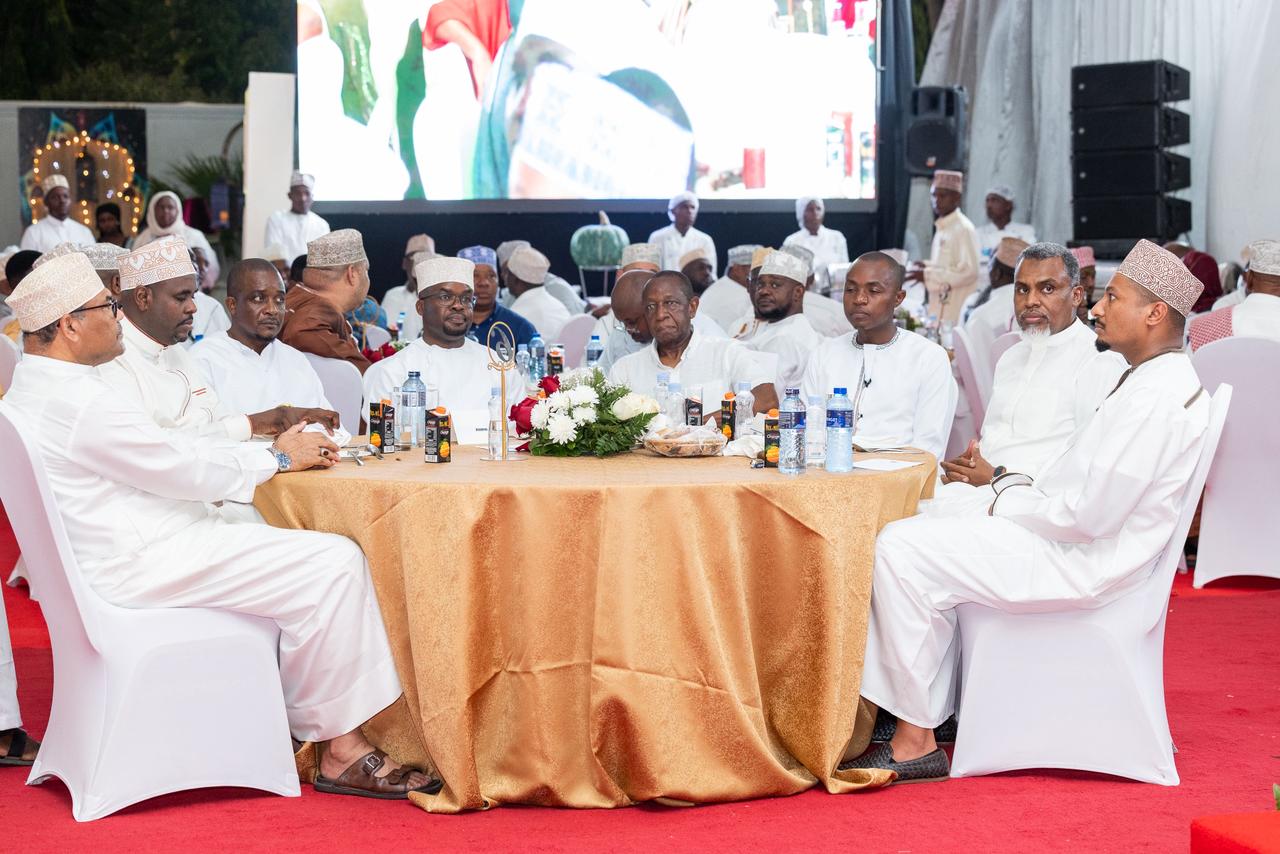
“For those of you who may not have the responsibility of leading from a national standpoint, you may not understand what unity can do,” he said on Friday while hosting an Iftar dinner for members of the Muslim community at State House in Mombasa.
Those present included ODM party leader Oburu Oginga, Mombasa Governor Abdulswamad Nassir, Senate Speaker Amason Kingi, Cabinet Secretaries Salim Mvurya (Sports) and Aden Duale (Health), among other leaders.
Ruto also credited the Broadbased Government with the successful rollout of the Kenya Pipeline Company Initial Public Offering at the Nairobi Securities Exchange.
He said the Cabinet memo proposing the privatisation of Kenya Pipeline Company was first drafted during the presidency of Mwai Kibaki (2002–2013) but stalled due to lack of political goodwill.
“That shows you the power of unity. As a leader, I do not take it for granted when leaders and citizens come together,” he said.
Speaking at the event, Oginga said the National Infrastructure Fund could help address the historical marginalisation of residents in northern Kenya.
He cited Sessional Paper No. 10 of 1965, which he said excluded arid and semi-arid areas from national development priorities.
“The National Infrastructure Fund must be used to correct that,” he said.
Ruto said 12 dams have been identified for funding under the fund, with about 60 per cent expected to be built in northern Kenya.
“That is the future of agricultural and food security interventions in Kenya,” he said.
The President also said the government will continue issuing national identity cards and passports to residents of northern Kenya who have historically faced challenges obtaining the documents.
“We are correcting injustices of the past and righting the wrongs meted out against fellow citizens because of prejudice,” he said.
He urged Kenyan Muslims to feel fully part of the country, saying the positions they hold in government are not favours but rights.
“As Muslims, the positions you hold in government today are not favours; they are rights you are entitled to as citizens of Kenya,” he said.
At the same time, the President called on Muslim religious leaders to partner with the government in the fight against alcohol and drug abuse, saying the vice is affecting many young people.
Also present at the dinner were Muslim religious leaders led by Hassan ole Naado, chairman of the Supreme Council of Kenya Muslims, Members of Parliament, Members of County Assembly and other guests.
