



By Shaban Omar
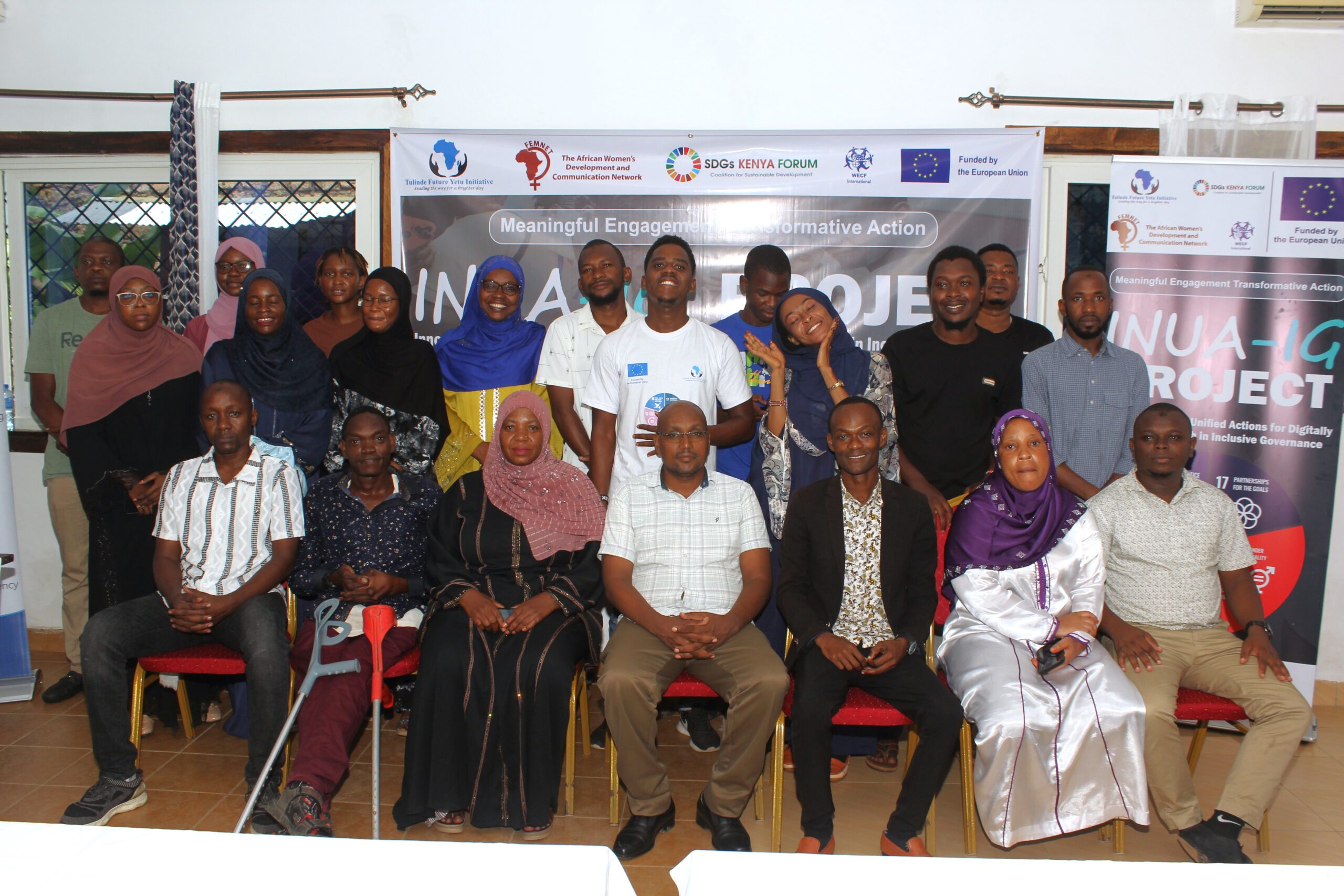
Life for many young people in Kwale is set for a major shift as a youth-led organization rolls out a transformative program aimed at redefining how the county’s youth engage with governance.
The initiative is dubbed the Innovating New and Unified Actions for Digitally Empowered Youth in Inclusive Governance (INUA) project which targets over 400, youth among them young women and persons with disabilities.
Behind the initiative is Tulinde Future Yetu Organization, a grassroots group working to equip the targeted youth and even government officials with the tools they need to navigate and shape modern governance.
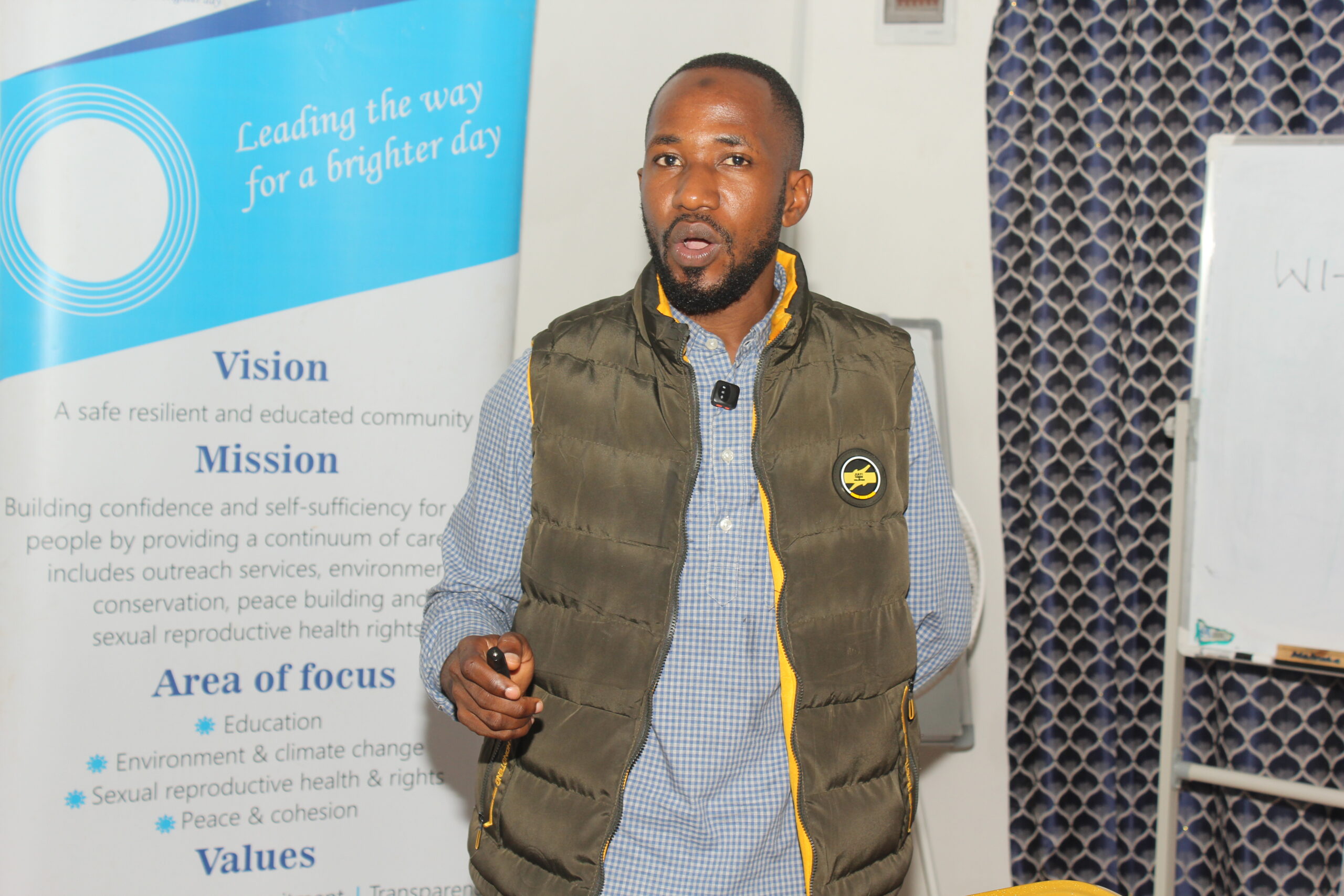
The project focuses on building capacity in areas such as governance, social accountability, digital advocacy, and digital literacy, skills that have become essential in today’s fast-evolving civic space.
The program also brings government officials to the table, creating rare spaces where citizens and duty bearers interact openly.
Through practical exercises, digital tools, and mentorship, participants will learn how to track public resources, demand transparency, and communicate effectively both online and offline.
In a county where digital access and civic participation remain uneven, the project is opening doors, empowering communities especially youth, women and PWDs to claim their voices while nudging leaders toward more inclusive governance.
For many participants, especially those from marginalized backgrounds, the program is an entry point into conversations they were previously excluded from.
During the launch Tulinde Future Yetu Organization Executive Director Salim Chidzuga underscored the urgency of equipping young people with the skills and confidence to take part in governance processes that directly affect their lives.
He noted that while youth across Kwale County are often invited to public participation forums, many struggle to contribute meaningfully due to limited knowledge of governance frameworks and digital tools.
“The programme seeks to bring meaningful engagement on matters of public participation and governance. We have seen youth being invited to some of these public participation forums, but they lack meaningful participation. They are just there to fill numbers but not to participate,” he said.
Chidzuga said the INUA project aims to change the narrative by training youth, young women, and persons with disabilities (PWDs) to understand the public participation, policy processes, ask the right questions, and use digital platforms to hold leaders accountable.
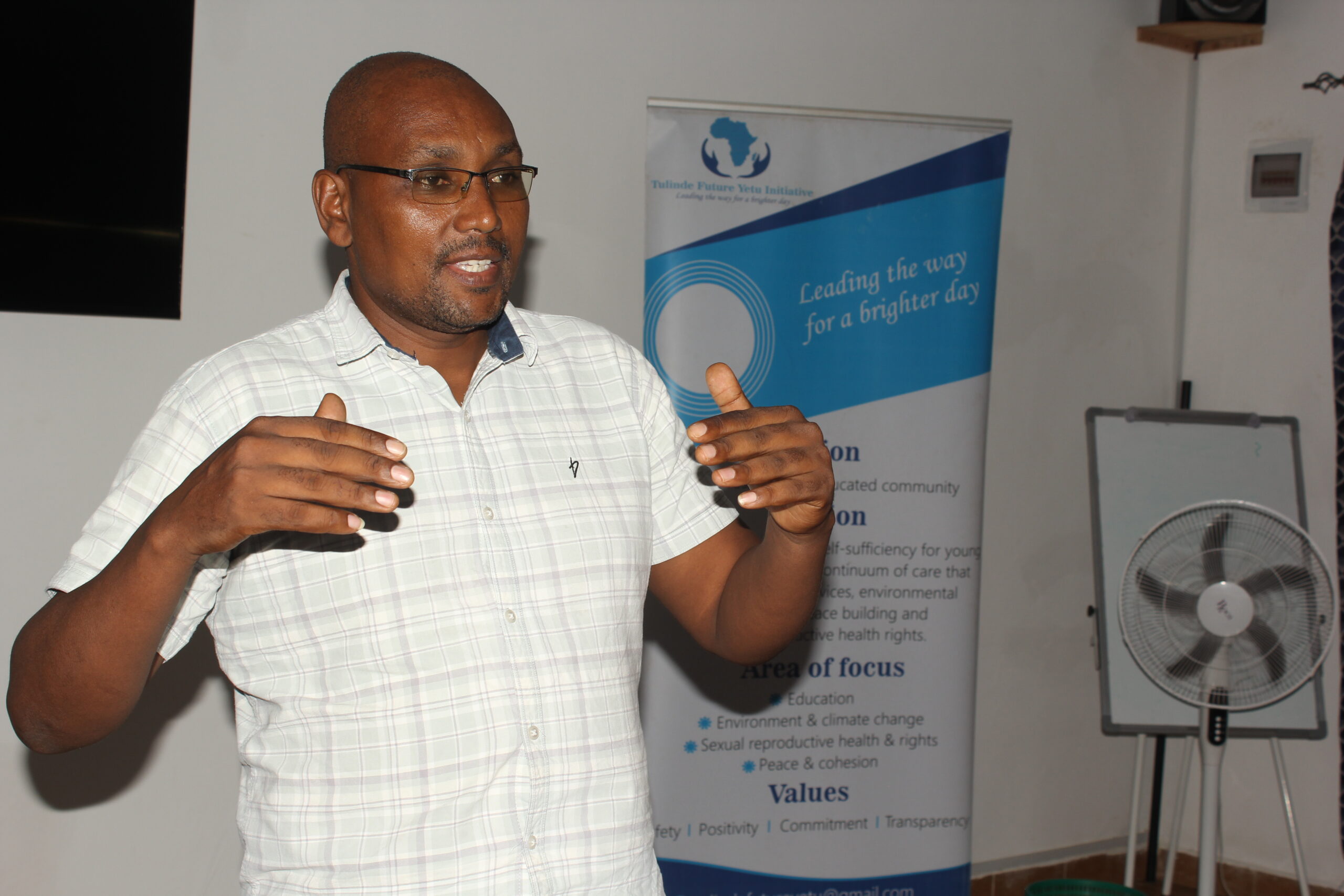
According to him, enhancing digital literacy and social accountability skills will ensure that young people transition from passive attendees to active contributors whose voices influence public decisions.
He said the organization hopes to nurture a generation of confident, informed, and digitally empowered youth who can advocate for transparency and help steer the county toward more inclusive governance.
The initiative has also attracted support from government officials who view it as a crucial step toward preparing young people for Kenya’s evolving political landscape.
Youth Affairs Director for Lunga-Lunga Sub-County and Msambweni Sub-County, John Githinji described the project as timely, noting that it comes just as the country begins gearing up for the 2027 General Election.
Githinji said building youth capacity in leadership, governance, and digital literacy will be key in ensuring that young people take up their rightful place in national conversations.
He emphasized that training programs like INUA will help demystify public participation processes, enabling youth to contribute substantively rather than symbolically.
“The project will help youth a lot since we want them to be familiar with digital literacy and how they can use it to convey the right and productive information,” he said.
According to him, equipping the younger generation with digital advocacy tools will not only empower them to ask tougher questions but also amplify their ability to share verified, constructive information, especially in an election season where misinformation can easily distort public opinion.
Githinji added that by strengthening the digital capacities of young people, the government hopes to see more youth confidently engaging in civic spaces, vying for leadership positions, and safeguarding democratic processes.
He further urged the youth to seize the opportunity the programme presents, noting that such initiatives rarely come by and could mark a turning point in their lives.
Githinji encouraged them to approach the training with seriousness and commitment, reminding them that meaningful participation begins with personal effort.
A champion and advocate for persons living with disabilities David Muema said the initiative finally recognizes and values the presence of PWDs an often overlooked group in governance spaces.
He noted that for years, people with disabilities have been sidelined in public participation forums, their concerns rarely reflected in policy discussions.
Muema said the INUA project is beginning to change that narrative.
“The project has given us a voice to raise our concerns and participate fully in leadership and governance,” he said.
Muema said that empowering PWDs through digital literacy and governance training not only boosts their confidence but also ensures that future decisions are more inclusive and representative of the entire community.
Kwale Youth Advocate Anzazi Zahoro said the programme will play a critical role in addressing the challenges that have continued to hold back many young people across the county.
Zahoro noted that the project is intentionally designed to confront inequalities by ensuring that women and PWDs are fully involved in governance processes.
She said that for years, these groups have struggled to access leadership spaces and have often been left out of critical decision-making forums.
“The project seeks to address inequalities by ensuring women and PWDs are involved,” she said.
She added that the inclusive model will help build a generation of empowered young leaders who understand their rights and are equipped to champion accountability.
