



By Amina Chombo
The 2026 edition of the Diani Beach Zero Plastic Festival has officially kicked off at Kongo Beach in Diani, Kwale County, bringing together government officials, environmentalists, students, and community members in a three-day campaign aimed at promoting environmental conservation and climate action.
The festival seeks to empower communities on issues of climate change, the blue economy, and the harmful effects of plastic pollution on both the environment and marine life.
Speaking during the opening ceremony, Kwale County Executive Committee Member (CEC) for Tourism and Trade, Michael Mutua, emphasized the need for collaboration among all stakeholders, including government agencies, private sector players, and local communities, to address the growing challenge of plastic pollution and protect the coastal ecosystem.
Speaking to the media, Sambasports Youth Trust Executive Director Mohammed Mwachausa warned that plastic pollution remains a major threat to marine ecosystems and human health.
“Plastic pollution remains one of the greatest threats to our oceans and marine life. If urgent action is not taken, the effects will not stop in the ocean—they will reach our dinner tables and affect human health and livelihoods,” said Mwachausa.
Mwachausa cited figures from the United Nations Environment Programme (UNEP), which show that plastics account for approximately 85 percent of marine litter, posing serious risks to ocean biodiversity and coastal livelihoods.
He added that while awareness of plastic pollution has increased over the years, more collective action is needed to reduce plastic waste entering oceans and other water bodies.

Health and Environment Research Institute (HERI Kenya) Director Juma Nassoro warned that plastic pollution in marine ecosystems poses serious risks to both aquatic life and human health. He explained that fish and other marine organisms often ingest plastic particles, which can then enter the human food chain when consumed.
“Marine organisms are increasingly feeding on plastic waste. When people consume contaminated fish and seafood, the effects of plastic pollution are transferred to humans, posing long-term health risks,” said Nassoro.
He noted that initiatives such as the Diani Beach Zero Plastic Festival have contributed significantly to raising public awareness and encouraging environmental responsibility among coastal communities. However, he stressed that much more needs to be done to effectively address the growing plastic pollution crisis.
The festival has attracted students from primary, secondary, and tertiary institutions, who have participated in beach clean-up exercises, plastic collection activities, and training sessions on environmental conservation and climate change.
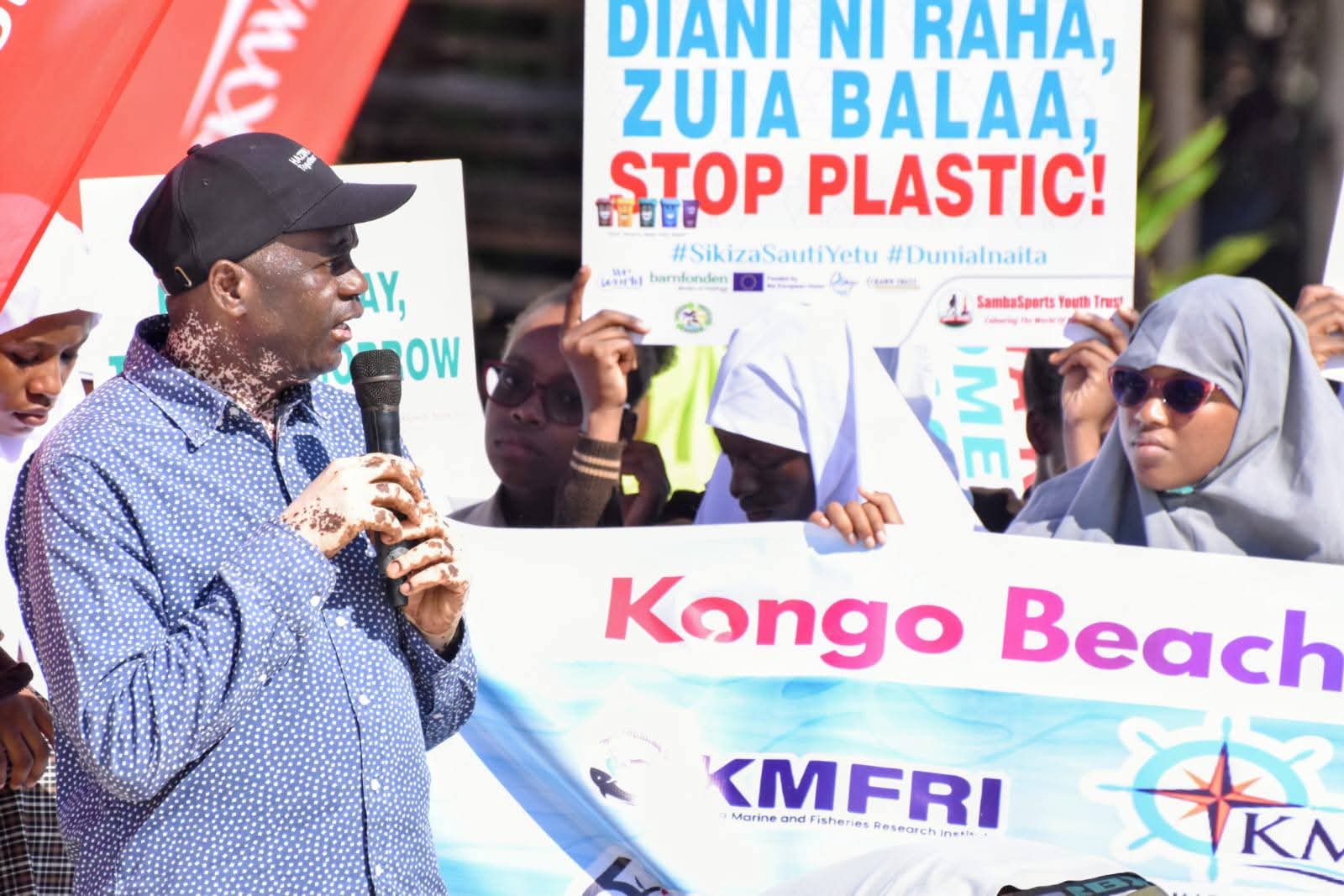
Msambweni Sub-County Education Officer Vincent Yawa applauded the organizers for the initiative, noting that it aligns well with Kenya’s Competency-Based Education (CBE) curriculum, which encourages learners to engage in community service and practical activities that help them understand the dangers of plastic pollution and the importance of environmental stewardship.
The three-day festival will conclude on Monday, coinciding with World Oceans Day celebrations, which raise awareness about the importance of oceans and the need to protect marine ecosystems from threats such as pollution, overfishing, and climate change.
The event is expected to feature a series of awareness campaigns, educational workshops, beach clean-ups, and stakeholder discussions aimed at promoting a plastic-free coastline and sustainable management of marine resources.
